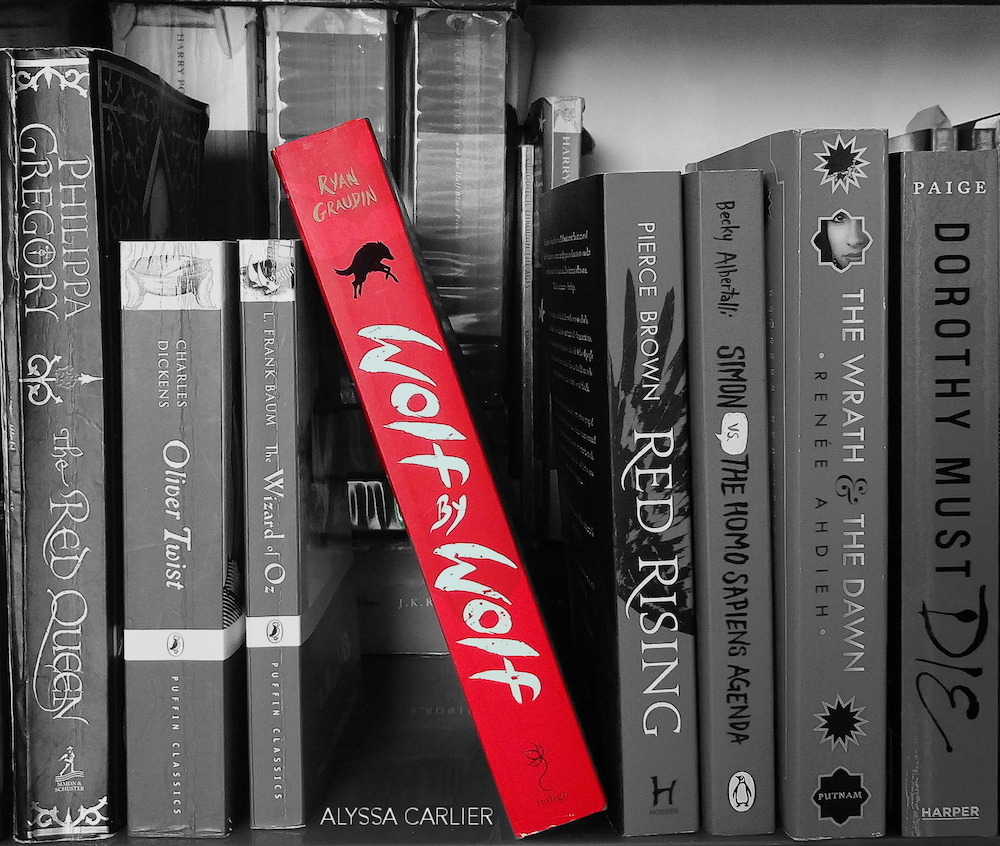
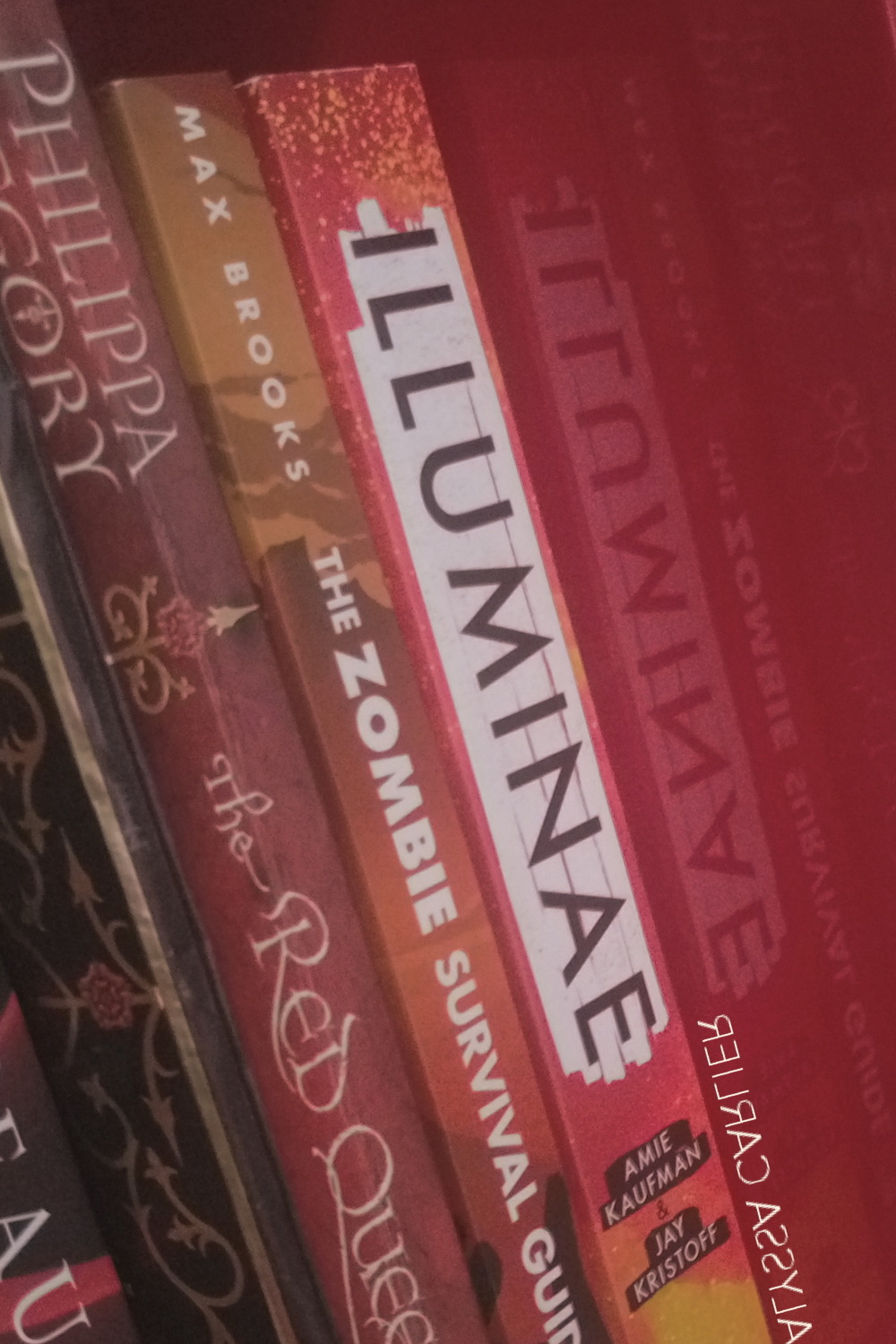
Showing posts with label #*. Show all posts

POST FROM THE DEVIL ORDERS TAKEOUT

Can there be TOO MUCH diversity in one book? (I say ... maybe.) Also, not the point.

Okay, okay, don't throw pineapples at me yet. If you know me, I am a huge diversity advocate, but let me discuss for a moment. More than a moment, because this post is super detailed. BUT I want to hear your thoughts afterwards!

ETA August 2018 -- this post was written quite some time ago and my views have evolved since then. I hope to elaborate more on this topic someday, but please view it critically in the time being.

Also, you should join my giveaway for a diverse book. Go ahead and tap "LATEST GIVEAWAY" at the top of your page -- it's my treat! 
Can there be TOO MUCH diversity in one book? Alyssa raises five arguments for and against this question.
The other day, I was planning rewrites for my witchy WIP (read some of this Mulan + Swan Lake retelling here.) This is one of my more experimental novels, with structural and narrative techniques and just. everything.

And of course it was diverse! I wanted to include ALL the representation. To plan my rewrites, I went online and started researching. (This is one of my two approaches to writing diversity.)

Then I had a complete mental breakdown because of all the opinions and issues that had to be addressed, and so I asked the question:

Can there be TOO MUCH diversity in a novel? (Pin this so your Pinterest friends can discuss too!)


Was I being an overly ambitious barnacle? Did I try to stuff too much diversity into my takeout??These are some of the answers I came up with when pondering the issue of too much diversity:

1. There is always space for more diversity.


Yes, everyone and their cousin and their delivery guy is talking about #WeNeedDiverseBooks. And I cannot articulate how much fandom has changed these years. Back in 2010, I wasn't in the blookunity, but I lurked in the Harry Potter fandom. Fast forward to 2016, and now I can see how wonderfully diverse everyone's fanfictions, fanart, fancasts, and even the canon adaptations are!

And gosh, most of the books I read then were white male cis narratives, and now? THE OPTIONS SEEM TO BE ENDLESS. So I don't want to ignore the steps that the industry has taken!
But the fact remains that diversity is growing fastest in contemporary, and there's still a lack of it in many other genres like fantasy, or dystopian, or thrillers. And even then ... a lot of the diversity doesn't seem to be enough.

(For more super insightful discussions on diversity, I highly recommend reading Mishma's guest post series on #DiverseReads2016.)

Diverse characters need to be in more central plotlines and in more plotlines in general.

So it didn't make any sense to me initially why I'd want to take away the diverse plotlines. Because (1) I liked them. A LOT. (2) they are necessary to change the narratives available to readers.

Let's be honest, so many of my childhood favourites are books about white people, and even though I enjoyed them perfectly well, I never saw myself in them. It's only in recent years that I've begun to see a more diverse range of books, and guess what? I enjoy diverse books so much more.

Because we read to vicariously live in worlds of dragons and talking bagels and magic takeout — and experiencing something out of the mainstream is part of that. For me, reading books has always been about experiencing more. To quote my favourite pirate, Delilah Bard:
I'd rather die on an adventure than live standing still. — A Darker Shade of Magic by V.E. Schwab (read my review of the sequel)
Considering that I am too frightened of the outside world to leave for more than mini quests to the supermarket, I'm going to live prancing around with a book instead. I joined the blookunity just as #WeNeedDiverseBooks was gaining traction, and this is the most wonderful adventure I've ever taken in my life.

So it seems absolutely ridiculous to actually reduce the amount of diversity in any novel.

2. Intersectional stories are so very important.


When we refer to "lots" of diversity, it's not only a great number of diverse characters — this also includes when one character has multiple diverse experiences. Also called, from Tumblr knowledge, intersectionality.

Let's put it this way: a white deaf person would face certain difficulties from their disability. But a black deaf person would face difficulties from their disability + prejudice because of their race.

Intersectionality is my favourite thing to read and write! Don't get me wrong, it's GREAT if a character is Jewish or trans or suffers from a chronic illness, but it makes me three times more excited if they are all these things at once. Because their story is about 3000 times more interesting and I hear it 3000 times less.

On that note, intersectional narratives are even rarer in YA than diverse narratives, and therefore they are needed for the same reason.

3. Said intersectional stories are realistic.


Most of us don't have only one diverse experience. Our lives are basically many experiences intertwined together, and for many of us, more than of these are diverse. We're not a blank mainstream character + one diverse experience = a diverse character! Yay!

The point of diversity is to be realistic. #WeNeedDiverseBooks is a movement to stop catering only to the privileged, but to everyone in the real world. And intersectional stories exist in the real world, and there is absolutely zero reason to avoid them.

Intersectional narratives are basically diverse narratives taken to the next level. The values towards supporting intersectional narratives — representation, realism, so on — are the same as diverse narratives, and they need to be validated. Too much diversity seems to be a fallacy. 
Reasons #WeNeedDiverseBooks and too much diversity is a fallacy
Roll your cursor over the image to tweet or pin it, blookunity!
But does fiction have to be realistic? Is there a point to which realism means poor storytelling, and even the best of intentions to portray diversity mean portraying it poorly? 

To what extent does diversity limit creative license? I considered:


4. The subplots for diversity take time away from the main plot.


I'm referring to books where the main plot is not about the diverse experience, aka most non-contemporary diverse books. Which are also genres where diversity is lacking.

Solution 1: Racing through the main plot
Which just makes for a less stellar story in general. And let's be honest, we won't pick up books JUST because they include diverse narratives — there are so many fantastic books with diverse narratives that diversity cannot (and should not be) a selling point.

Diverse stories need to be good stories first, or they won't resonate with the reader and undercuts the effect of diverse representation.

Solution 2: Racing through the diverse subplots 

So if the main plot needs to be addressed, the other option is to just kind of mention all the diverse subplots. Look, an asexual person in their natural habitat at the end of page 83! And over there, a wild Pokemon appears! Wait, wrong fandom.

If the diverse subplots are only there for the sake of it ... I'm not convinced. It's totally cool to have diverse tertiary characters, but it's diverse representation, not diverse mention. Diversity needs the centre stage sometimes, and if the programme overruns, that makes it less valuable as representation.

5. The subplots for diversity take time away from each other.

Sure, so we'll take time to explore the diversity ... but diverse characters need character arcs, and if there are multiple diverse experiences, then probably there are multiple character arcs to be developed.

Even if the main plot is not compromised, overstuffing a book with diversity means that the diverse subplots will take time away from each other. And that's going to be unfair to one or both or all of those narratives.

Another interesting thing is that many diversity discussions indicate that a single instance of diversity often doesn't satisfy readers. For example, many people ask diverse writing help Tumblrs what if my villain is agender? what if my f/f romance ends in tragedy? The answer, 99% of the time, is: better include another diverse character/relationship.

While I absolutely think it's feasible to include several diverse narratives in a book — I also think if a book has so many narratives that none of them are properly explored, then as the blookunity so often calls it, the diversity becomes "checking boxes off a list" even if it didn't start off that way.

You'll notice that both of my points are about diverse subplots needing time and attention. Because I believe that diverse representation is important — but plain representation is not enough.
What diverse representation needs and why diverse books cannot be too ambitious
Roll your cursor over the image to tweet or pin it, blookunity!

Why I think there CAN be too much diversity in one book: good diverse representation needs time and space to be developed. (Click to share this discussion to Pinterest!)


A narrative where we say, "Oh, and by the way, there's a black character who experiences racism over there, and a genderqueer character who faces family pressure, and a character who is living with disabilities down the street, and also—" means that we rob these diverse narratives of the time and attention they deserve.

To be clear: I don't think there is enough diversity in the fiction industry. I think there can be a line where so much diversity is in one single book, whatever the author's intentions, it becomes token diversity.

And that's not okay, because diversity in a book isn't just about avoiding stereotypes, but exploring them.

The takeaway from this post? Is not that we need less diversity.

My main point here is that we should stop talking about the "quantity" of diversity. Does it matter if a book includes ALLLLL the diverse experiences? Let's start talking about well-explored diversity instead.


Blookunity! Do you think books can have TOO MUCH diversity? Have you read books with token diversity where you wish more time had been taken to explore said diversity? And oh! Recommend me your favourite diverse book!


Tweet out the takeout!
Join my takeout army to receive monthly letters of magic, madness, and murder!

POST FROM THE DEVIL ORDERS TAKEOUT

The Step-by-Step Guide to Awesome Bookstagram (with a phone) + VSCO Walkthrough Infographic!

Guys, I'm doing it again. This is an intense, 2000-word post to walk you through the entire process of taking a book photography, including why and how to use VSCO, plus five insanely easy bookstagram template styles to get you started right away.

ETA: I'd love to be friends with you on Instagram! I'm at hkalyssa, and I follow back bookish/author accounts.
Let's be honest, every book blogger and their dragon has tried book photography these days. Whether your bookstagrams get 200+ likes every day, or you just tweet a photo of an ARC you're excited to read, book photography is the easiest way to spared the book love.

If you feel like you are terrible at anything artsy, or have no idea how to bookstagram, or want to streamline your bookstagram process ... this post is for you.

Get started with five easy bookstagram templates!

This post is going to walk you through the four steps to take any book photo. Yay!

1. Plan your book photo.


The single most important key to book photography is intention. Sure, you can take a thousand photos and hope one turned out well, but intention will take that success rate WAY higher. Some questions to ask yourself:

(a) Where are you using this photo?

This is important to dimensions! If you're posting it to Instagram, then your photo should be square. On Tumblr, square to tall images work best, and you can even use a set of photos. On Pinterest, images should be tall.

All these factor into how you arrange your book photo.

(b) Why are you taking the photo?

Do you want to show off your shelf? Flaunt some gorgeous swag? Spotlight a single book? These will all affect how you set up the photo to emphasise certain elements.

(c) What themes can you include?

Is the book about parallel universes? Perhaps you could take the picture upside down. Or is it about time travel? Include a pretty pocket watch there!

(d) Choose your aesthetic wisely!

Your book photos are the visual representation of yourself as a book blogger. The bookstagrams that get the most attention aren't just "awesome". They're "airy", "bold", "dreamy" ... all these specific aesthetics help so much.

If you aren't sure what your aesthetic is, you might want to start from developing your book blogger trademark, which is how you appear online 99% of the time.

2. Set up your book photo.


Here are the most important things you need for a book photo:

(a) BOOKS: Obviously!

If you're featuring a single book, then that is of course in the photo. But will you need other books to act as props? Or maybe a shelf to be a background? Will the books be stacked up, spread on the ground, murdering zombies for you? THE POSSIBILITIES ARE ENDLESS.

(b) Props: Like I said, books can already be props. There's no need to be too fancy here — there are so many props that you can find in your own house. Stamps, stickers, stationery, bath salts, cosmetics. Or book swag! You can even make your own props — fold some origami, or use the trick I'll discuss in the next section.

Oh, and check out this list of 50+ props over at Nellie and Co.!

(c) Blu tag: BOOKSTAGRAM LIFESAVER.

Okay, so repeat after me: what they can't see doesn't matter. Blu tag is simply the best for affixing any set-ups that aren't super secure, especially when you're including props and whatnot. Paperbacks also have the nasty habit of the pages curling up, so a little blu tag along the sides will put that right.

You can even be creative with this and shape some models out of blu tag to act as props. You can reshape them when you're done! (I'd show you examples, but my artistic skills = 0.)

(d) Background: Here are four of my favourite backgrounds to use!
  1. White — paper or cardboard doesn't always look natural, which is why I prefer using a blanket or a towel
  2. A quilt — same concept as a white blanket or towel, but with colour or patterns. Do make sure it doesn't clash with your books.
  3. The floor — tiles or wooden planks are already a fantastic texture, so go ahead and put the precious books on the floor!
  4. A shelfie — what could possibly make a photo of a book better? AN ENTIRE SHELF OF BOOKS.
A good background is essential to a flatlay! Here's a photo where I used wrapping paper from Christmas as a background:
(e) Lighting

Natural light is actually not always best! Yes, everything looks much brighter, but I've taken perfectly lovely bookstagrams with artificial light.

I do prefer natural light, but let's be honest, we have books to read and blog posts to write and takeout to eat so we can't always time it right. Natural lighting works only in early morning or late afternoons, or on a cloudy day. And in any event, it works best when you're taking the photo outdoors.

Types of natural light that don't really work:
  • direct light. just, no.
  • light coming from behind your set up
  • light coming from one side (e.g. a window)
The best thing about artificial light is that you can control it. I've used my desk lamp to supplement natural light by eliminating shadows.

But don't worry that much about lighting — most of the time it can be fixed with a little editing. More on that below!

3. Take your book photo.


This is the step where there are a lot of guides out there, so I'll keep it brief! But I really recommend Nova @ Out of Time's post because she discusses a lot about angles and such.

Oh, and I use a phone for all my book photography. It's absolutely doable — there will be limitations, but most book photography don't require a super pro camera if you don't want to!

My tips for this step:
  • Set up your book photo as planned and take multiple shots.
  • Don't forget to focus on the right part. Change around your focal point as well to try out the effect.
  • Take your photos with a little extra space around the edge, just so you have more to work with when cropping.
  • Change your angle. Vantage shots, side shots, shots while you're lying on your side with one leg up in the air ... unique angles immediately set a photo apart.
  • Change around little things in your book photo.
  • Check the photos halfway through your mini photoshoot. Do any of them work? Are there things niggling at you?
  • If you're feeling unsure, take the photo through a VSCO filter or other editing app.
  • Change around big things in your book photo. Be open to changes.
  • When you're done, share your photo to your computer! I do this via Pushbullet for single photos or Google Drive/Dropbox for batches of photos.
Woah, feeling a little overwhelmed? This all seems a little abstract? Not to worry, I distilled it down into five basic concepts you can easily start with:

Please email me five easy bookstagram templates!

4. Edit your book photo.


This is where the magic lies, blookunity.

In my opinion, the VSCO editing app is a lifesaver, although I know some people use Snapseed. I love mobile editing apps instead of Photoshop or the like because I can edit my photos right on my phone and think over whether I need a new shot, without transferring back and forth.

By the way, I get zero profit or anything from recommending VSCO. I just happen to really like the app.

VSCO has some fantastic free filters that I take advantage of when I'm in a hurry, but if you want to give your photos a unique edge, you should definitely toggle the settings one by one. Not sure what I mean? Fear not, here's the infographic:
Blookunity! Don't forget to pin this image for future reference — just roll your cursor over the infographic and buttons will appear in the center.

However, if you want some complex edits to really set yourself apart, some more complex tools might be needed. GIMP is my go-to tool because it is nearly as versatile as Photoshop, but completely free!

My favourite complex edits are to play with black-and-white or to stitch photos together. Take a look:

Do not forget to watermark your image!

Not that people will steal the image, but oftentimes it gets pinned somewhere or shared to Facebook without your original link. Plus, a watermark opens up even more options for unique editing.

2-minute watermarking for Macbook users:
  1. For your first time, go to GIMP or other editing software and create your desired watermark as a PNG file with a transparent background. Save it as "WATERMARK".
  2. Open your book photo and watermark png in Preview.
  3. Go to your watermark png window, press command + A, then press command + c.
  4. Go to your book photo window, then press command + v. Your watermark will appear!
  5. To move it around, simply use your mouse to drag the selection around.
  6. Bonus tip: rotate the image by keeping one finger on the trackpad, and moving a second finger in the desired direction. Yay!
  7. Super bonus: click and hold on a corner of your watermark, then give your finger a spin to flip the watermark.

5. Share your book photo. Eat takeout. Yay!

Excited to start? Get your bookstagram templates!

Any extra book photography tips? Which step do you find most difficult? Recommend me your favourite bookstagrammer!

Don't forget: I'd love to be friends with you on Instagram! I'm at hkalyssa, and I follow back bookish/author accounts.

POST FROM THE DEVIL ORDERS TAKEOUT

QUIZ: What condition are your books in?

QUIZ: What condition are your books in?
Welcome to the Hospital for Bound Paper Monsters. Today, Dr Alyssa Carlier will provide a diagnosis for your books and their health condition. Please try to relax. *brandishes weapons — ahem, medical equipment*
First, take this quiz to evaluate what condition your books are in. The results are based on your general behaviour and hence only an average of your books' condition. Please don't trust my medical advice.

STAGE 0: A Perfectly Healthy Monster.

Congratulations! Your books are absolutely pristine, without even minor spine bending. They're good as new—reread them and have your heart broken exactly like the first time, down to the pages between your fingers.

STAGE 1: Localised Tarnishes.

Hmm, it appears your books aren't exactly perfect. A little dog-eared, or cracked spines, or perhaps wear and tear on the cover? Not to worry, though, they're still sharp as ever and can claw out your feels.

STAGE 2: Your Monster Is Missing A Claw

Whoops! A page or two flew away, the cover fell off, or maybe a chapter got thirsty and drank a few drops of water. Bookmarks, plastic coverings, or a nice treasure chest may be well-placed investments. But no worries — you can still recreate the story. Just be careful where those tears fall.

STAGE 3: RED ALERT. GENETIC MUTATION.

Oh, dear. Half the book has fallen out. The pages are all crumpled. The words are blurred by water. It seems impossible that anyone can read this book — except you. Clearly you loved this book to ruins, so you can read it again from memory.

Alternatively, you adore staining the pages with coffee and tea and tears, marking pages where you broke your heart, and highlighting key phrases. That's okay too! It's no longer the same book, but still an awesomely heartbreaking book.

Was the quiz accurate? Which stage are your books in, blookunity? (Also, brownie points for anyone who can name the Stage 2 book!)


Twitter-sized takeout:
Want safer versions of books? Join my takeout army to receive monthly electronic snippets of my writing and more! Ebooks can stay in Stage 0 for a shockingly long time. ;P

POST FROM THE DEVIL ORDERS TAKEOUT

Writing Kitchens [2]: How Can We Write Diversely?

how to write diversely
ETA: this post was written as a teen and may not reflect my current views. Leaving it here because the comments are gold. 

We have a tough topic and a long post, but it would mean the world if you stuck with me today because diverse representation is important and really, it doesn't need to be difficult. First, a word of philosophy: write whatever you want, so long as you respect (a) yourself and (b) other people. The following is only advice.

First of all, what is diverse representation? We hear things like #WeNeedDiverseBooks and LGBTQIA+ all the time, but what does it really mean? The WNDB site defines it like this:
We recognize all diverse experiences, including (but not limited to) LGBTQIA, people of color, gender diversity, people with disabilities*, and ethnic, cultural, and religious minorities.

*We subscribe to a broad definition of disability, which includes but is not limited to physical, sensory, cognitive, intellectual, or developmental disabilities, chronic conditions, and mental illnesses (this may also include addiction). Furthermore, we subscribe to a social model of disability, which presents disability as created by barriers in the social environment, due to lack of equal access, stereotyping, and other forms of marginalization.
This may seem overwhelming. But this really, really long list is why I simply stamp my foot and refuse to calm down when people say, "Oh, I'm not personally familiar with any form of diversity, so I shall hide in my rabbit hole and write straight-cis-white-Christian-boy fiction."

Approach 1 to Writing Diversely: Write what you know but others don't.


Repeat after me: you have seen diversity in your life.

This doesn't mean you must necessarily belong to some sort of minority or marginalised group or anything. One aversion is when for some reason you know a lot about a religion, culture, etc. because you studied it for a thesis or something. But let's say you have never learned anything but "mainstream" stuff.

Open up your Facebook friends list, or Twitter following list, or whatever. Scroll through it. Then look yourself in the eye and tell yourself, "No one I know has a diverse experience." They are all heterosexual cisgender white able-bodied, etc. etc. etc. people.
See? It's impossible. (I may have cheated, because you'd have to claw out one of your eyes. But my point stands.)

Maybe your cousin has panic attacks, or your best friend is Hispanic, or — well, you get the idea. Or maybe, you live in Hong Kong (hello there!) or Singapore or the Phillippines or Saudi Arabia or. My point is, every person is one step ahead of someone else in learning about diverse experiences. Find that step. Write about it.

And if you're writing diversely from what you know but others don't, representation suddenly becomes not hard at all. Posts about how terrifying it is to write diversely without appropriation or stereotyping are everywhere on the Internet. But it shouldn't be terrifying to base representation off your own experience, because doesn't everyone base their fiction off their reality?

(Really, the terror comes from the second approach, which I have also used. All in good time.)

This is why it was second nature for me to write Winner Takes All and Witches Black and Silver because even if I fail Chinese tests, I have lived Chinese culture. If I do use research, it isn't panicked "Tell me EVERYTHING about this country/religion/etc.", it's "huh I heard that once is it true?"

So the next time you want to scream "But I can't write diverse books!" remember this. Look for how your experience has differed from everyone else's. It's good practice for college app essay writing.

OH. And. Support diverse authors, too. Aimee @ Deadly Darlings has a list for you.

Approach 2 to Writing Diversely: Research your brain out.


See, the one above was the easy one. This approach is the more common, though, and even if it's more difficult, this shouldn't stop you from trying at all.

The reason diverse representation is so important? Thus far, the creators of books and other media have primarily been white straight cis etc. etc. people. Because they were more privileged, they also received better education and had more time to create and consume all this media.
But the world is changing. Past "minorities" are now consuming media, and they are not seeing themselves in it. So we clamour for diverse representation, and because (a) many creators are still privileged and have fewer diverse experiences and (b) the status quo is difficult to change, always. So people fret.

(And fretting is good. Fretting means you care.)

So everyone starts to exclaim, what if I get it wrong? what if I fall into stereotypes? what if I forget this really important thing and I get mobbed? why is the icing on the cake still white that's not diverse! HEEEEEELP ME!
Not the last one. But the fear is real, and whenever I write outside my comfort zone, it happens. My Matryoshka readers, I hope, are prepared to calm me down with diverse cake when I panic.

But it is possible. The Internet is an amazing place. Wikipedia, online encyclopedias, Tumblrs and blogs about different experiences. Diversity Cross Check is somewhere you can go to chat with people with diverse experiences, and intersectionality is fabulous here. And there's Writing With Colour and Writing in Variance and really, there is no excuse anymore to not write diversely because of unfamiliarity.

If you're really worried? Talk to someone relevant. The blogosphere is an amazing amazing place. Tweet for help, DM people you sort of know, write a blog post saying, "I need betas who have experience being cyborgs and living off pine trees and worship three hundred deities." Again, not really. But in 99% of cases, when you ask, people will answer and help.

And people are much, much better than websites, because like it or not, there is this thing called a collective memory. So if you try and say, romanticise the Opium War, I will come after you personally with a frying pan. (And this is why writing from your own diverse experiences will probably be more powerful than research and imagination cobbled together.) Behind the diversity, there are people.

(This is why I have my Chinese culture posts. And know that if you ask me a question about China, I will probably come back to you with a page-long essay, half of which is translated from the Baidu page. I will answer.)

And one last note: by no means allow your fear of writing diversity "wrongly" stop you at all. Not one bit. Write your own diverse experiences, write someone else's — but write diversity.

Which approach do you think is better? Also, recommend a diverse book in the comments!


Writing diversely is important, but so is reading diversely. Join my takeout army and start reading my Mulan translation! Call it research if you're hoping to write a Chinese setting.

P.S.: We've switched to Disqus for a while; is everyone commenting okay? If it doesn't work, email me or Tweet me or message me on Tumblr and let me know why. If you don't have Disqus, remember, you can always comment as guest:
Twitter-sized takeout:
The Writing Kitchens is an original blog feature on The Devil Orders Takeout that shows the behind-the-scenes of my writing and occasionally a line or two from my current project.

POST FROM THE DEVIL ORDERS TAKEOUT

Does Disney NEED to cast a Chinese actress for Mulan?

There has been an insane amount of enthusiasm (yep, nice non-controversial word) about casting a Chinese actress for Disney's live-action remake of Mulan.

Plus read a translation of the original Mulan now!

UPDATE: Disney has managed to avoid pitfall #1 and casted Liu Yifei as Mulan! Yay! Still, there are more important things:

Let me just say this: if Disney tries to cast someone ridiculously off the mark as Mulan, I can only conclude they have been hijacked. Dammit, Hydra.

But does she absolutely, definitely have to be Chinese?


I really appreciate the amount of thought and effort people are putting into this petition. To whitewash, or wash in any colour you like from black to purple, an integral part of Chinese tradition would be horrible.

But here are two requirements that I've seen online and found dubious:
  • cannot be Japanese, Korean, Vietnam, or anywhere from Asia BUT China
  • cannot be half-Chinese, half-something else; must look Chinese
Let's address both of these.

The Mulan actress must not just be Asian, but Chinese.


First, a dash of humour. So what about Taiwan? What about Hong Kong and Macau? I can tell the difference between a mainlander and a HKer about 80% of the time. My mum has a better rate. Are we Chinese? Would it be okay if the actress was Taiwanese? Whoops, what if they come from the Spratlys or Diaoyu Islands or one of the many islands China thinks belongs to them?

Yeah, those islands aren't populated. But remember: China has been around for a looooong time. And our borders have changed.

Any sort of cultural identity is fluid. While I believe a Chinese actress would bring their own experience to any adaptation, I think there are more important "Chinese elements" that a live action adaptation needs.

ETA: It is absolutely fantastic that Disney has decided to strive for cultural authenticity, though.

The Mulan actress must not be only half-Chinese and must look Chinese.


To be fair, I think the original posters meant "don't find someone half-Caucasian and looks Caucasian".

I don't think I need to point out how ridiculous it is to exclude biracial people — and seriously, if you're judging whether people are ~Chinese enough~ or ~Asian enough~?

Sit down in a corner and hug a slimy octopus, thank you.

In the meantime! The type of Chinese person you see most is Han Chinese. However, there are also 55 ethnicities living in China and are also part of Chinese culture. We all have fabulous fashion and cuisine.

To ask for someone who looks Chinese is to ask for someone who looks American. Should an American be white and blond and tall, or an African American, or an eagle? And in the case of China, because we have an insanely long history of wars and whatnot, there has definitely been some mixing in terms of ethnicity, so the lines aren't quite that clear.

Oh, and just some food for thought. Mulan is a folktale that originated during the Northern Wei Dynasty. During this time, the country was a mess and refugees were fleeing left and right and north and south. It's also, according to my history textbook*, a time when people of different ethnicities started integrating to some extent within China. It's entirely possible that Mulan wasn't even Han Chinese. She was said to be fighting for the foreign 可汗, a title for Mongolian kings.

*ETA: I have now discarded this textbook. If you were forced to take Chinese history in school, please treat yourself to a marvelous slice of cake.

My arguments basically boil down to this one point:

Who is Chinese? How do we define China?


This isn't something I can cover in one blog post, or even in a blog series. It's a question that's tangling Hong Kong even now as we struggle to reconcile our differences with Beijing. But the presence of this question, I think, undercuts the absolute nature of saying "The actress for Mulan must be Chinese".

All I really need Disney to do, in terms of casting, is to convince me in the theatre that this is a Chinese folktale.

And while the wrong actress would ruin that effect, here's what's more important to me:
  • Do NOT turn Mulan into some Western altar of rebellion and individualism, i.e.:
    • Please get rid of the forced-into-marriage subplot? It's not unrealistic, but it overcomplicates Mulan's motivations. Doesn't preclude romance.
    • Why Mulan left = she loves her family. Arya Starks unnecessary.
    • Let's say this again: Mulan does not need to rebel against "convention". The original ballad starts with her weaving, for goodness' sake. It ends with her reapplying makeup.
  • Acknowledge core values in Chinese culture, a.k.a Confucian values:
    • Courtesy. Greetings, precedence, tea, everything, for worldbuilding.
    • Filial piety, i.e. respect and love for parents. Expectation to care for them in their old age.
    • Patriotism patriotism patriotism. We are worse than America and their eagles.
    • Integrity. Mulan is lying via proxy to the emperor and to everyone else. A huge no-no in Confucian values. Character motivations, please.
  • Please include older sister present in original, because sisterhood.
  • Please make the scenery and the fashion look like they're Chinese. This is literally the best part of ANY c-drama and Disney needs to bring their A-game.
  • Those pets were cute. But they do not belong in a live-action film.
    • Exception will be made for bunnies.

Your thoughts on the live-action Mulan? Are you excited or worried about it? I AM VERY WORRIED. Disney, don't mess up.


P.S.: If you enjoy the legend of Mulan, you'll love my modern re-imagining with witches, assassins, and magical snacks.

Get updated with sneak peeks and the latest news about a grave robber taking down an empire of witches!

POST FROM THE DEVIL ORDERS TAKEOUT

Chinese Culture [2]: Mulan

Chinese Culture Appreciation is a blog series that aims at explaining tidbits of, well, the Chinese culture. As a girl from Hong Kong, I really hope to share more of my amazing, historically rich world with you.

I'm sure everyone has heard of Mulan, if only because of the Disney animation. And Disney's even announcing a live-action remake in the vein of Cinderella 2015.
Therefore, this is the perfect time to introduce the original to all you grasshoppers: please welcome The Ballad of Mulan.

Recap of the original ballad:


Mulan is weaving at her window, worried about the fact that every family has to send a boy to join the country's army. Her father, who is pretty old, asks her what she's thinking about. "I'm fine," she answers, just like any other teenager. Then she goes to buy a horse and a saddle. And rides off to replace her father. (No marriage attempts so far!)

They fight in wars, almost everyone dies, and this is heartbreaking in the original but I can't translate it, so there. Needless to say, Mulan not only lives, but distinguishes herself in battle. (No grandiose saving-the-country, though.)

The emperor rewards Mulan with gold and a really important political position. In ancient China, all anyone cared about was getting damn political positions. Mulan turns it down and asks for a horse that travels a thousand miles per day. (This is also another biggie in ancient Chinese texts.) And of course, she goes home. CMOH.

Her parents and older sister come out to meet her, and she goes into her room and gets back in girls' clothes. Her army companions, who apparently escorted her home, are henceforth shocked. You mean we fought beside a girl for twelve friggin' years?

Yeah. That's literally it.

Why I desperately love it:

  • It sounds beautiful. It can't be translated perfectly, but seriously, it flows in Chinese.
  • Mulan survives a war that kills 99.9% of the army. That is kickass.
  • Literally zero romance. Marriage woes? Nope. Hot warrior prince? Nope. Mulan just goes home.
  • Amazing representation of Chinese values. Filial piety. Bravery. Patriotism. Loyalty. 
I love it so much that in my novel set in pseudo-China, Mulan still exists, albeit under a slightly different name. Hell, one of my MCs' storylines is an adaptation of this ballad.

The live-action adaptation, I'm guessing, will still be adapting from the animation. And I fully acknowledge that it's impossible to make a two-hour movie just out of two pages of ancient Chinese text, but the starkness of this folk tale is what makes it beautiful. The animation doesn't quite do it justice.

What I'm really saying is: appreciate the storyline that's not dramatised for Disney. Mulan is, very simply, the story of a girl who left home and made it back. (Tweet this!)

What are your prerequisites for a translation or adaptation? Thoughts on Mulan and its film versions?


ETA: I've written a direct Chinese-to-English Mulan translation in iambic tetrameter. Join my takeout army and start reading right away!